Wolfgang Amadeus Mozart
The Magic Flute—Holiday Presentation
This production ran: Dec 11 - Jan 3
This production is in the past.
Overview
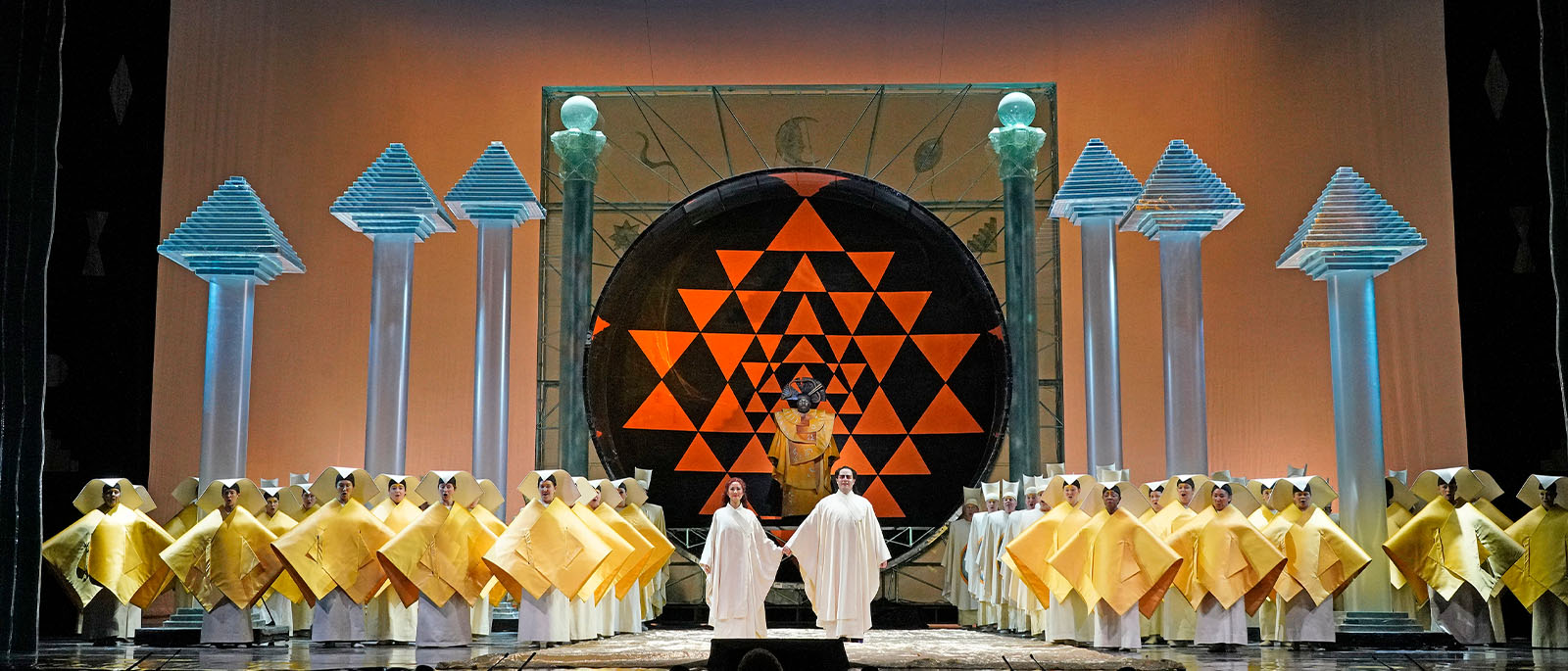
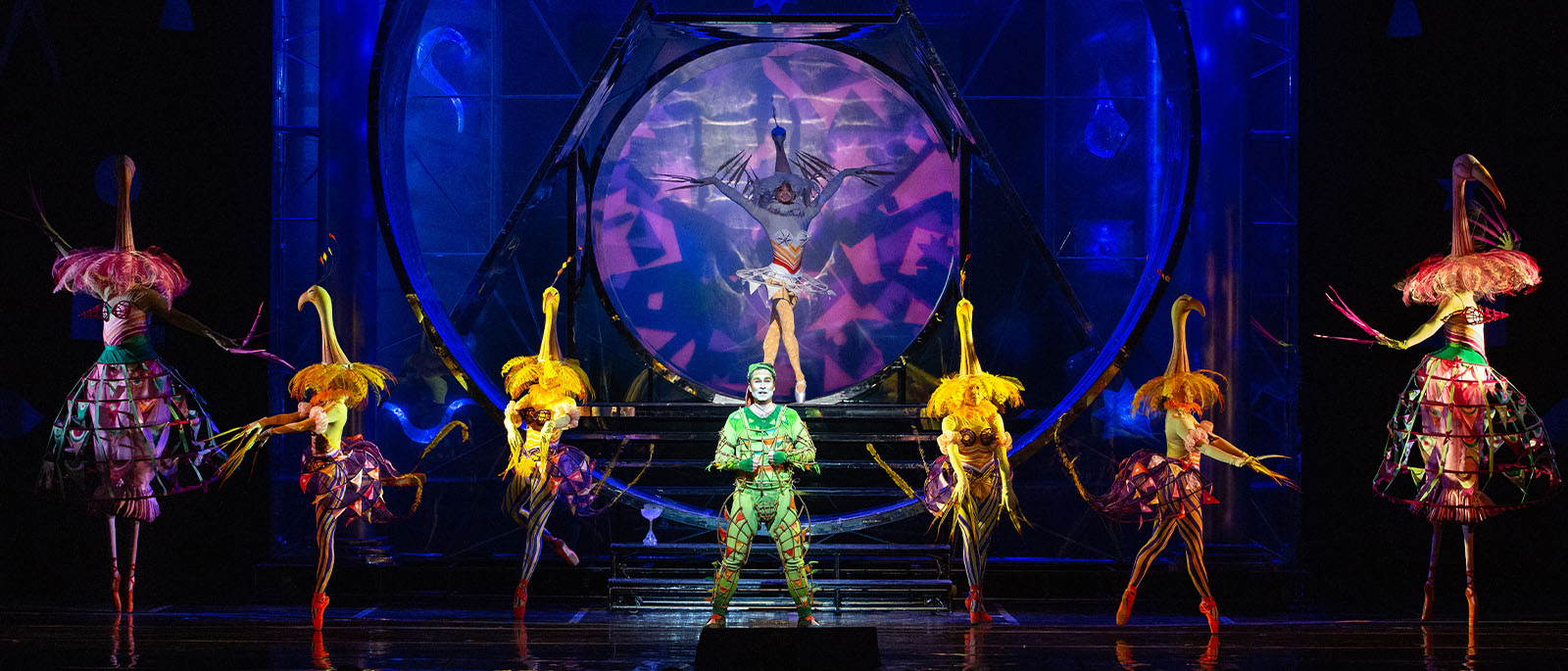
A treasured holiday tradition, Mozart’s heartwarming fairy tale takes the stage in the Met’s abridged, English-language production by Julie Taymor—the Tony Award–winning director of Broadway’s The Lion King. Featuring some of opera’s most popular melodies and brought to life with colorful sets and costumes and dazzling puppetry, it’s perfect for audiences of all ages.
At every performance of The Magic Flute, families can enjoy free activity books and themed photo opportunities throughout the lobby. Special downloadable activities are also available online to explore before or after your visit. Complimentary face painting will be available before the matinee performances on December 27, 29, and 30 and January 3.
The Met’s annual Holiday Open House will take place on December 14, inviting children and families to take part in hands-on musical explorations and experience behind-the-scenes demonstrations by members of the Met’s backstage and artistic staff. The Open House is free to all ticketholders for the December 14 performance; register here or when completing your ticket purchase. Please note that the December 14 performance is now sold out.
Abridged production of The Magic Flute a gift of The Andrew W. Mellon Foundation and Bill Rollnick and Nancy Ellison Rollnick
Original production of Die Zauberflöte a gift of Mr. and Mrs. Henry R. Kravis
Additional support from John Van Meter, the Annenberg Foundation, Karen and Kevin Kennedy, Bill Rollnick and Nancy Ellison Rollnick, Mr. and Mrs. William R. Miller, Agnes Varis and Karl Leichtman, and Mr. and Mrs. Ezra K. Zilkha
Revival a gift of Diane Pachetti
Languages
Languages sung in The Magic Flute—Holiday Presentation
Sung In
English
Titles
Title languages displayed for The Magic Flute—Holiday Presentation
Met Titles In
- English
- German
- Spanish
Timeline
Timeline for the show, The Magic Flute—Holiday Presentation
Estimated Run Time
1 hrs 30 mins
-
House Opens
-
90 mins
-
Opera Ends
Cast
Select a date from the dropdown to filter cast by date of performance
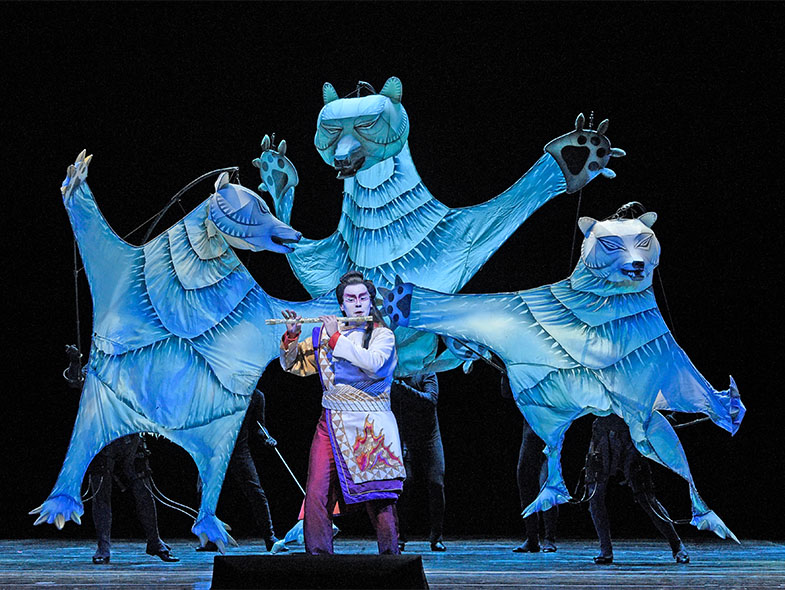
World Premiere: Freihaus-Theater auf der Wieden, Vienna, 1791. A sublime fairy tale that moves freely between earthy comedy and noble mysticism, The Magic Flute (Die Zauberflöte in the original German) was written for a theater located just outside Vienna with the clear intention of appealing to audiences from all walks of life. The story is told in a singspiel (“song-play”) format characterized by separate musical numbers connected by dialogue and stage activity, an excellent structure for navigating the diverse moods, ranging from solemn to lighthearted, of the story and score.
Creators
Wolfgang Amadeus Mozart (1756–91) was the son of a Salzburg court musician who exhibited him as a musical prodigy throughout Europe. His achievements in opera, in terms of beauty, vocal challenge, and dramatic insight, remain unsurpassed. He died three months after the premiere of Die Zauberflöte, his last produced work for the stage. The remarkable Emanuel Schikaneder (1751–1812) was an actor, singer, theater manager, and friend of Mozart who wrote the opera’s libretto, staged the work, and sang the role of Papageno in the initial run.
Production
Julie Taymor
Set Designer
George Tsypin
Costume Designer
Julie Taymor
Lighting Designer
Donald Holder
Puppet Designers
Julie Taymor and Michael Curry
Choreographer
Mark Dendy
English Adaptation
J. D. McClatchy
C. Graham Berwind, III Chorus Director
Tilman Michael

Composer
Wolfgang Amadeus Mozart
Setting
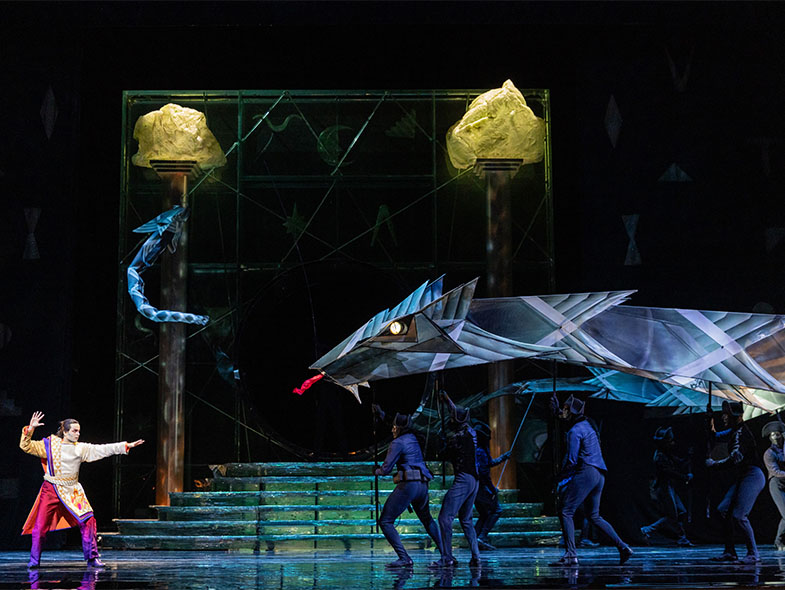
The libretto specifies Egypt as the location of the action. That country was traditionally regarded as the legendary birthplace of the Masonic fraternity, whose symbols and rituals populate this opera. Some productions include Egyptian motifs as an exotic nod to this idea, but most opt for a more generalized mythic ambience to convey the otherworldliness that the score and overall tone of the work call for.
Videos
Music
Mozart and his librettist, Emanuel Schikaneder, created The Magic Flute with an eye toward a popular audience, but the varied tone of the work requires singers who can specialize in several different musical genres. The baritone Papageno represents the comic and earthy, the tenor Tamino and the soprano Pamina display true love in its noblest forms, the bass Sarastro expresses the solemn and the transcendental, and the Queen of the Night provides explosive vocal fireworks.